There are cities that introduce themselves through their monuments, and then there is Lucknow, a city that introduces itself through its manners. Here, a conversation can feel like poetry, a meal can become an elaborate affair, and even the simplest greeting carries a certain elegance. Known as the City of Nawabs, Lucknow has long been celebrated for its refined culture, architectural grandeur, literary traditions, and distinctive way of life. Situated along the banks of the Gomti River (opens in new tab) in Uttar Pradesh, the city is a fascinating blend of history and modernity, where centuries-old traditions continue to find a place in an ever-changing urban landscape.
To understand Lucknow, one must first understand the idea of tehzeeb. Often associated with etiquette, refinement and graciousness, tehzeeb is more than simply good manners. It is an entire cultural philosophy, reflected in the way people speak, welcome guests, share meals and interact with one another. The city's famous expressions of politeness, its elaborate greetings and its emphasis on hospitality are all part of a cultural identity shaped by centuries of Nawabi influence (opens in new tab). In Lucknow, even a disagreement can occasionally sound like a carefully rehearsed exchange of poetry.
Much of this cultural identity took shape during the rule of the Nawabs of Awadh (opens in new tab), particularly in the eighteenth and nineteenth centuries. Under their patronage, Lucknow developed into an important centre of art, music, architecture, literature and culinary excellence. The Nawabs transformed the city into a cultural capital, attracting poets, musicians, craftsmen and artists from different parts of the subcontinent. Their influence can still be seen in Lucknow's magnificent historical buildings, traditional crafts and enduring artistic traditions.
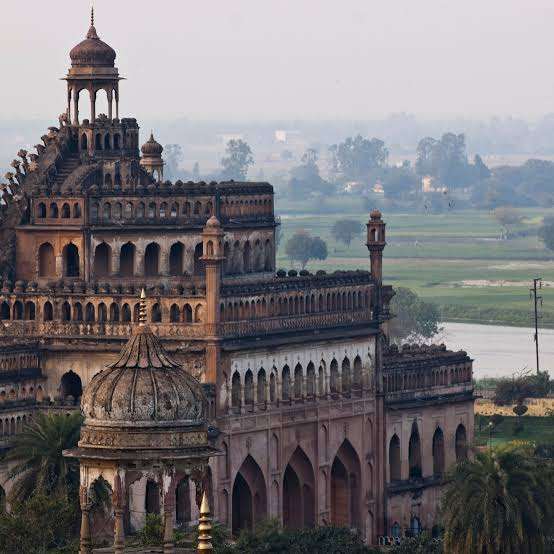
One of the most remarkable examples of this architectural legacy is the Bara Imambara (opens in new tab). Built by Nawab Asaf-ud-Daula in 1784, the magnificent complex is renowned for its enormous central vaulted hall and extraordinary architectural design. The monument also contains the famous Bhul Bhulaiya (opens in new tab), an intricate labyrinth of passageways that has fascinated visitors for generations. Nearby stands the Rumi Darwaza, an imposing gateway that has become one of Lucknow's most recognisable landmarks. Its elaborate design, inspired by Ottoman architectural influences, reflects the city's historical connections and artistic ambitions. The Chota Imambara, with its ornate interiors, chandeliers, and decorative elements, offers another glimpse into the architectural sophistication of Nawabi Lucknow.
Yet, Lucknow's cultural identity extends far beyond its monuments. It is equally visible in its literary heritage. The city has long been associated with Urdu poetry, ghazals, mushairas, and classical literary traditions. Poets and writers found an environment in which language was celebrated as an art form, and this appreciation for expression continues to influence the city's cultural life. Lucknow's relationship with language is particularly fascinating: words are not merely used to communicate but are often chosen for their elegance, rhythm, and subtlety. It is a city where conversation itself can become an experience.
And then, there is the food. Any discussion of Lucknow that overlooks its culinary heritage would be incomplete. The city's Awadhi cuisine is among the most celebrated regional food traditions in India, known for its slow-cooking techniques, delicate flavours and elaborate preparations. Lucknow is particularly famous for its kebabs, especially the iconic Galouti Kebab, traditionally associated with the city's royal kitchens. The melt-in-your-mouth texture, fragrant spices, and intricate preparation have made it a culinary landmark. Tunday Kababi remains one of the city's most recognised food establishments, attracting visitors eager to experience this legendary delicacy. Beyond kebabs, Awadhi biryani, nihari, sheermal, kulcha and an assortment of traditional sweets contribute to Lucknow's extraordinary food culture. From the old eateries of Chowk to the food streets of Aminabad, the city offers an experience that is as much about culinary heritage as it is about flavour.
Lucknow's traditional crafts are another important part of its identity. The city is particularly famous for Chikankari, an intricate form of hand embroidery that has been practised in the region for generations. Delicate floral patterns, fine threadwork and beautifully detailed fabrics have made Lucknow Chikankari renowned across India and beyond. The craft represents the patience, skill and artistic sensibility of local artisans, many of whom continue to preserve traditional embroidery techniques. Exploring the markets of Aminabad and Chowk offers visitors an opportunity to discover these textiles alongside traditional jewellery, perfumes, handicrafts and other local treasures.
But Lucknow is not frozen in its Nawabi past. The modern city has developed into an important centre of education, commerce, administration and urban development. Hazratganj, with its colonial-era architecture, established shops, cafes and contemporary retail spaces, captures this transition particularly well. The neighbourhood has retained much of its historical charm while adapting to the tastes of a newer generation. Meanwhile, newer parts of the city reflect its expanding infrastructure, modern residential developments, and evolving lifestyle. This coexistence of old and new gives Lucknow a distinctive character, allowing its historical identity to remain visible without preventing the city from moving forward.
The city's relationship with culture is also reflected in its festivals and celebrations. During Muharram, Lucknow's historical Shia traditions become particularly visible through religious observances and processions. Festivals such as Diwali (opens in new tab), Holi (opens in new tab) and Eid bring neighbourhoods together in different ways, while cultural programmes, music performances and literary gatherings continue to celebrate the city's artistic heritage. These occasions reveal a city whose identity has been shaped by diverse communities and centuries of cultural exchange.
Perhaps what makes Lucknow so memorable is its ability to preserve an unmistakable sense of character amid change. Its grand Imambaras, bustling bazaars, traditional eateries, and elegant old neighbourhoods tell stories of a different era, while its modern streets reflect the aspirations of a contemporary Indian city. It is a place where history is not confined to monuments but remains embedded in everyday life.
To visit Lucknow is to experience several different worlds at once. You can spend the morning admiring the architecture of Bara Imambara, the afternoon exploring Chikankari shops in Aminabad, and the evening enjoying an elaborate Awadhi meal. You can walk through Hazratganj (opens in new tab), discover the literary traditions of the city, or simply sit at a local tea stall and observe the rhythm of everyday life.
Perhaps the greatest lesson Lucknow offers is that refinement does not necessarily belong to another age. It can survive in the way people welcome strangers, preserve their crafts, prepare their food, and share their stories. In a world that often seems to be moving faster with every passing day, Lucknow retains a certain affection for slowing down.
After all, some cities are remembered for what they built. Lucknow is remembered for how beautifully it learned to live.
Written by Aksheet Dhanvijay