Some cities belong to geography. Others seem to belong to something far older: stories, memories and the collective imagination of generations. Ayodhya is one such place. Situated along the banks of the Sarayu River (opens in new tab) in Uttar Pradesh, this ancient city occupies a rather extraordinary position in India's cultural and spiritual landscape. It is a place where mythology spills into everyday life, where centuries-old traditions continue to shape the present, and where history is not simply remembered but lived. To understand Ayodhya is to look beyond its monuments and temples and explore the many layers of a city that has existed, in one form or another, in the imagination of millions.
Long before Ayodhya became a destination on India's tourism map, it occupied an important place in the stories of the Ramayana (opens in new tab). Traditionally regarded as the birthplace of Lord Rama, the city is described in Hindu sacred literature as the capital of the ancient kingdom of Kosala (opens in new tab). In the Ramayana, Ayodhya is portrayed as a prosperous kingdom, governed by King Dasharatha (opens in new tab), whose son Rama would eventually become one of the most revered figures in Hindu tradition. His journey of exile, the abduction of Sita (opens in new tab), the battle against Ravana, and his eventual return to Ayodhya form the foundation of a story that has travelled across generations, languages, and geographical boundaries.
What makes Ayodhya particularly fascinating is how these ancient narratives have survived beyond the pages of religious texts. They exist in everyday conversations, devotional songs, temple rituals, folk performances and annual celebrations. The Ramayana is not merely a story that people know; it is a cultural inheritance that continues to influence how they understand duty, family, sacrifice and righteousness. In Ayodhya, these ideas are given a physical setting. The streets, temples and riverbanks become part of a landscape through which generations have interpreted and retold the same stories.
Yet, to understand Ayodhya entirely through mythology would be to overlook its equally fascinating historical identity. The city, also known in historical and literary traditions as Saketa (opens in new tab), has a long and layered past. It was associated with the ancient Kosala region and appears in different religious and literary traditions. Beyond Hinduism, Ayodhya holds significance in Jain traditions, while the wider region also carries traces of Buddhist heritage (opens in new tab). Its cultural history reflects the presence and influence of different religious communities, artistic traditions, and ruling powers. This diversity makes Ayodhya more than a pilgrimage destination; it makes it an important part of the broader story of India's civilisational history.
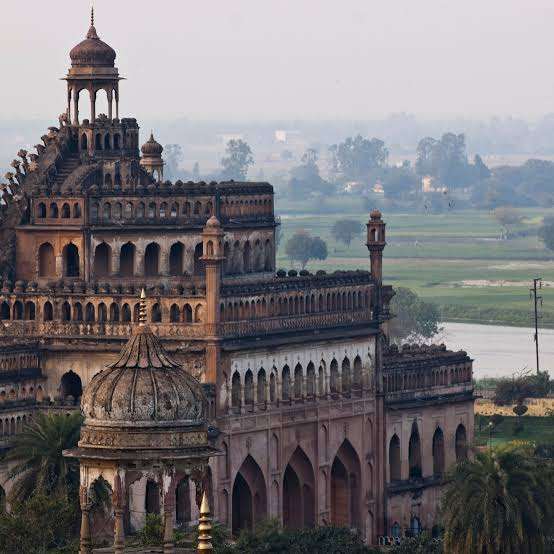
The city's architectural landscape offers another glimpse into this layered past. While its temples remain central to its identity, the wider Ayodhya-Faizabad region also reflects the influence of Nawabi architecture and culture. Gulab Bari (opens in new tab), the mausoleum of Nawab Shuja-ud-Daula, is one such example. Its gardens, fountains, and traditional Charbagh layout offer a striking contrast to the religious architecture more commonly associated with Ayodhya. These spaces remind visitors that the region's history cannot be contained within a single period or cultural tradition. It has been shaped by different communities, rulers, and artistic influences, each leaving behind traces of its existence.
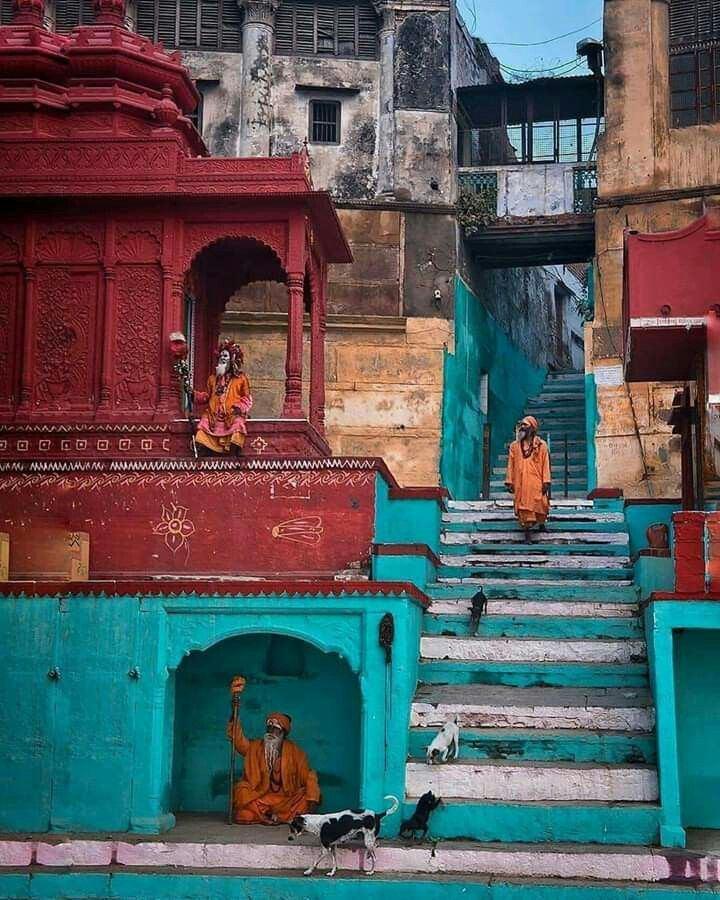
At the heart of this ancient landscape flows the Sarayu River. More than a geographical feature, the river is deeply woven into Ayodhya's religious and cultural identity. For centuries, its banks have served as places of prayer, ritual bathing, and quiet reflection. The ghats, particularly Ram Ki Paidi (opens in new tab), are among the city's most recognisable landmarks. Early mornings bring devotees to the water, while evenings transform the riverfront into a gathering place illuminated by lamps and accompanied by devotional music. There is something timeless about watching the river continue its journey while generations of people gather along its banks, each carrying their own prayers, memories and reasons for being there.
The rhythm of Ayodhya is also shaped by its festivals. During Ram Navami, the city becomes a centre of celebration as devotees gather to commemorate the birth of Lord Rama. Deepotsav, the annual celebration associated with Diwali (opens in new tab), brings another remarkable transformation, with thousands of earthen lamps illuminating the riverfront and surrounding spaces. These celebrations are not simply events on a religious calendar; they are expressions of a cultural identity that has been preserved through collective participation. Music, folk performances, devotional storytelling, and traditional rituals come together to create an atmosphere that is distinctly Ayodhya.
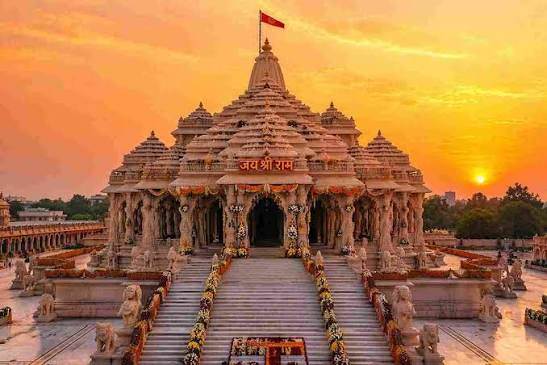
And then there is the Ayodhya of the present. The city has undergone considerable transformation, particularly following the inauguration of the Ram Mandir in January 2024. New infrastructure, improved connectivity, accommodation facilities and increased tourism have brought renewed attention to the city. Pilgrims, domestic travellers, international visitors and history enthusiasts now arrive in growing numbers. The ancient streets coexist with expanding roads, modern developments and an evolving urban landscape. For a city so closely associated with the past, Ayodhya is also negotiating the demands and possibilities of the future.
Perhaps this is what makes the city so compelling. It exists at the intersection of different understandings of time. There is the Ayodhya of the Ramayana, preserved through faith and storytelling. There is the Ayodhya of historical records, shaped by centuries of political, cultural, and religious change. And then there is the Ayodhya of today, a living city whose identity continues to evolve. These versions do not necessarily compete with one another; together, they form the many layers through which the city can be understood.
For a visitor, exploring Ayodhya can therefore become an experience that goes beyond conventional sightseeing. Visiting the Ram Mandir, walking through the old neighbourhoods, exploring Hanuman Garhi (opens in new tab) and Kanak Bhawan, or spending an evening beside the Sarayu River offers different ways of engaging with the city's cultural heritage. Even the quieter moments, such as watching the flower sellers prepare their garlands or listening to devotional music drift through the streets, reveal something about the relationship between tradition and everyday life.
There is, perhaps, a larger lesson in the way Ayodhya exists. Cities are often described through dates, monuments, dynasties and historical events. But their identities are also built through stories passed between generations, traditions practised without much thought, and memories that become part of a shared cultural consciousness. Ayodhya embodies this relationship between history and storytelling in a particularly striking way.
To visit Ayodhya is to encounter a place where the past is never entirely past. It lives in the songs sung at temples, the rituals performed along the river, the stories narrated during festivals, and the architecture that has survived the passage of time. It is a city that invites curiosity as much as devotion, reflection as much as exploration.
Perhaps Ayodhya's greatest significance lies not in any single monument or historical period, but in its ability to hold so many stories within one landscape. It is a city shaped by myth, marked by history and continually reimagined by the people who call it home. And somewhere between the ancient stories of the Ramayana and the sounds of a modern city waking up each morning, Ayodhya continues to write its own history.
Written by Chinmayi Srinivasan